Pastor Phone

Pastor Brian Bucklew
graceneligh@gmail.com
Worship time: Sundays at 10:30 a.m. Sunday School at 9:30 a.m.

Saturday, April 15, 2017

Easter Service Schedule

Grace Lutheran Neligh is offering two services on Easter Morning, April 16:
Easter Sunrise Service with Holy Communion at 7:00AM
Easter Breakfast Served by the Lutheran Laymen's League following the Service
Easter Service with Holy Communion at Elgin at 9:00AM
Easter Service with Holy Communion at 10:30AM


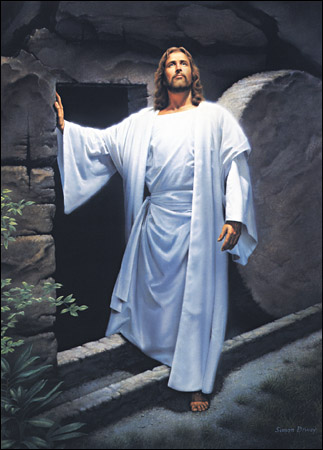
Christ is Risen!
He is Risen Indeed, Alleluia!!!
Tonight, April 15, Grace Lutheran will Celebrate the Great Easter Vigil at 8PM.  The congregation will gather at a bonfire in the parking lot.  If you have not been to an Easter Vigil Service, there is a description below.  Tonight at the Easter Vigil there will be a baptism (along with remembrance of our Baptism).  (Please note this service is about an hour and a half, so come planning for patience.)  The Lord's Supper will also be offered.


Easter Vigil Explained


Scott Kinnaman in his blog "Blog My Soul" explains the Easter Vigil Service like this:

The Great Vigil of Easter, kept on the Eve of the Resurrection of Our Lord, is the culmination of the Holy Triduum. It brings to a festive completion the three-day service that began on Holy Thursday and continued on Good Friday. In itself, the Easter Vigil is a transitional service. In much the same way that Holy Thursday was both the conclusion of Lent and the beginning of the Triduum, so the Easter Vigil both completes the Triduum and ushers in the Fifty Days of Eastertide. This transition is poignantly manifested in the course of the vigil, which progresses purposefully from darkness to light. It celebrates specifically the passage of Christ from death into life, and the Church’s passage through death into life with Him through Holy Baptism. The night begins with hushed anticipation, proceeds with eager expectation, and finally climaxes in the exuberant celebration of the Paschal Feast.


The Easter Vigil is very much a Christian “Passover,” that is, a celebration of the great exodus that Christ Jesus, the Lamb of God, accomplished by His sacrificial death and brought to light in His resurrection from the dead. All that the Lord God did for Israel in bringing His people out of Egypt and into the Promised Land He has perfectly fulfilled for all the baptized, who are the new Israel, in His cross and resurrection. In Holy Baptism we have come out of Egypt and have crossed the Red Sea with Him, and have entered with Him into Canaan through the Jordan. In the Paschal Feast of Holy Communion, we eat and drink the true Passover Lamb. His blood covers us and protects us from sin, death, and hell; His body feeds and sustains us on our way. (Pless)


In particular, the Easter Vigil proclaims and confesses that as we have died with Christ by our Baptism into His death, so do we also rise with Him and live with Him in newness of life. It is for us that He died and rose from the dead. The Vigil lays hold of that sure and certain hope in the Gospel, or, better, the Vigil lays hold of us and brings us with Christ out of death into His life. It does so not by any sort of magic, but by the Word and Spirit of God.

With its rites, ceremonies, and propers, the vigil itself catechizes pastors and their congregations in the paschal mystery celebrated on this night. The most important preparation, therefore, is for service participants to study carefully and rehearse the notes and rubrics of the Easter Vigil. When all is well prepared and the service can proceed according to its proper rhythm, the Word of God in the readings and prayers of the Easter Vigil will do its own work among the people of God.


The Easter Vigil is presented in six parts: the Service of Light, the Service of Readings, the Service of Holy Baptism, the Service of Prayer, the Service of the Word, and the Service of the Sacrament. Each part has its own integrity and contributes to the progression of the whole. The Service of Light, in which the paschal candle is consecrated for use and lighted as a sign of the Lord’s resurrection, may take place at a bonfire outside the church building. To accentuate the continuity of this night with the Passion of our Lord, the gathering may occur where the congregation assembled for the procession with palms on Passion Sunday. After the consecration of the paschal candle, the people follow it into the church, as Israel followed the pillar of cloud by day and the pillar of fire by night in the exodus from Egypt. During this procession, “The Light of Christ” (“Thanks be to God”) is chanted at three points, which may replicate the points at which the sentence “Behold, the life-giving cross” was stated during the adoration of the cross in the Good Friday service. These ceremonial associations contribute to the way in which the Easter Vigil holds together the cross and resurrection of the Lord Jesus Christ as the New Testament Passover.

The Service of Light crescendos in the chanting of the Exsultet (which ideally is sung rather than spoken). This beautiful proclamation of the paschal mystery sets the tone of the entire Easter Vigil, celebrating the fulfillment of the Old Testament exodus in the resurrection of the Christ. It rings out in the night, in much the same way that the candles break into the darkness with their shimmering light. There is the tension of waiting, a pregnant expectation of that which has already been accomplished but has yet to be openly announced. It is no secret that Christ has risen from the dead—no more so now than on Ash Wednesday or at any other time throughout Lent. Yet the Church on earth lives in, with, and under the cross of Christ; thus she experiences the now-and-not-yet of the resurrection in the Word of the Lord.


Although the handheld candles of the congregation should be carefully extinguished at the end of the Exsultet, the Service of Readings should proceed in semidarkness, with only as much light as necessary for the reading of the Holy Scriptures and for the prayers and canticles of the people. The Readings are the distinctive and definitive heart of the Easter Vigil. They set forth a series of Old Testament prophecies and types of the Christ, of His cross and resurrection, and of the Church’s participation in His dying and rising again. It is not expected that congregations will employ all twelve Readings, but as many of these as possible should be used. At least the first three Readings should always be used (the creation, the flood, and the exodus), and preferably the twelfth Reading (the three men in the fiery furnace). A selection of four Readings is given here, along with congregational responses in the form of two psalms and two canticles. The congregation should sit for the Readings, kneel for the collects that follow each Reading, and stand for the psalms or canticles that are interspersed with the Readings. Because the Church waits on the Lord in steadfast faith and hope by giving attention to His Word, there is no need to hurry through the Readings. Congregations comprised largely of younger members may arrange to observe the Easter Vigil through the hours of the night, culminating in the early dawn of Easter Sunday. In such a case (presumably rare), all of the Readings would be used; each followed by its collect, the appropriate psalm or canticle, and separated with periods of silence. The Readings do not require commentary because within the context of the entire week, the collects, psalms, and canticles provide appropriate and sufficient reflection of the Word by which the Lord catechizes His people and accomplishes His purposes among them.

Whether or not there are catechumens to be baptized at the Easter Vigil, the Service of Baptism follows the Readings as a return to the death and resurrection of repentance and faith that all the baptized share with Christ by the washing of water with His Word and Spirit. Here is the crossing of the Red Sea with the One who is greater than Moses, which already anticipates the crossing of the Jordan with the New Testament Joshua (Jesus, the Christ). This returning to the significance of Holy Baptism through contrition, repentance, and faith in the forgiveness of sins is to be the daily and lifelong discipline of every Christian. It is here embraced at the very heart of the Easter Vigil, in remembrance and celebration of the cross and resurrection of Christ. It is not meant to replace the daily taking up of the cross to follow Jesus as His disciples, but it is observed in service and support of that Christian faith and life. This is the fulfillment of Lent and the rebirth of an Easter life.


The Divine Service of the Easter Vigil is somewhat simpler than the usual Sunday observance, yet it is not as full and festive as the chief Divine Service on Easter Sunday will be. The same basic movement takes place: from the Word of the Gospel to the Word made flesh in Holy Communion, received in faith and with thanksgiving. In this case, the Prayer of the Church (in the Litany of the Resurrection) precedes the basic pattern of the Word preached and the Sacrament administered, which serves to further heighten the unity of the Holy Gospel and Holy Communion.


The Service of the Word at the Easter Vigil is really as much or more a part of the entire Eucharistic rite rather than a separate component. In contrast to the deliberate and steady pacing of the Readings, the Service of the Word proceeds forward swiftly. Ideally, this would occur after night fall as there is now a striking transition from darkness to light, from the sobriety of Holy Week to the sights and sounds and celebration of the Easter feast. That is signaled by the Easter acclamation: “Alleluia! Christ is risen! He is risen indeed! Alleluia!” The altar candles are now lighted from the paschal candle, the lights in the church are turned on, bells are rung, the organ opens up in jubilation, the Gloria in Excelsis is sung, and the Lord’s altar is prepared for the Sacrament (there is no offering or offertory in the usual manner).

The proclamation of the Easter Gospel (John 20:1–18) testifies that the Jesus who died and was buried is not only no longer in the tomb, but has been raised bodily from the dead. The preaching of this Gospel should be straightforward and direct, brief and to the point. All of Holy Week and the entire Easter Vigil have been an extended proclamation and catechesis of the Word, the Law and the Gospel, to repentant faith in the Lord Jesus Christ. Therefore it is neither necessary nor desirable to have a lengthy sermon at this point.


The Service of the Sacrament will follow according to one of the usual settings of the Divine Service, beginning with the Preface. Here it is suggested that Setting Four continued to be used as it has throughout this Lenten series. While other settings may surely be preferred in some congregations, Setting Five should not be chosen for use at the Easter Vigil. Note the special Post-Communion Collect appointed for the Easter Vigil.

The color of the day at the Easter Vigil is white and/or gold. However, the church should be kept in semidarkness until the Service of the Word, at which point there is a transition to all the trappings of Easter, as previously indicated. Depending on the circumstances, the altar may be dressed and adorned with the appropriate paraments, Easter flowers, and other accoutrements at this point in the service. The logistics for such a transition require planning and rehearsal to avoid awkwardness or uncertainty. Similarly, the celebrant and his assistant(s) may prefer to be vested in cassock and surplice, but at this point they would vest in alb (and chasuble for the celebrant) for the Service of the Word and Sacrament.

*From "Rubrics and Notes for Celebrating Lent and Holy Week in the Lutheran Congregation"

Prayer for Easter Vigil

O God, You made this most holy night to shine with the glory of the Lord's resurrection. Preserve in us the spirit of adoption which You have given so that, made alive in body and soul, we may serve You purely; through Jesus Christ, Your Son, our Lord, who lives and reigns with You and the Holy Spirit, one God, now and forever. (466)

Friday, April 14, 2017

Good Friday Service 7:30PM

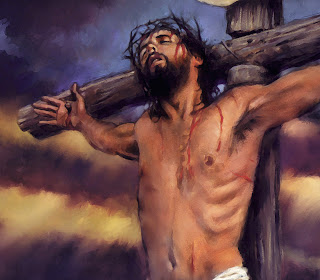
Friday, April 14 we will be remembering the Friday the Church calls Good at 7:30PM.  It is called Good not because what happened to Jesus, for on this night He suffered and died for the sins of the world.  The Church calls this Friday Good because of what it means for the church.  On this night Jesus died for our sins.  Join us to remember what Jesus did for you.
Image result for crucifixion of jesus
Good Friday Gospel reading: John 19:17–30 
17 and he went out, bearing his own cross, to the place called The Place of a Skull, which in Aramaic is called Golgotha. 18 There they crucified him, and with him two others, one on either side, and Jesus between them. 19 Pilate also wrote an inscription and put it on the cross. It read, “Jesus of Nazareth, the King of the Jews.” 20 Many of the Jews read this inscription, for the place where Jesus was crucified was near the city, and it was written in Aramaic, in Latin, and in Greek. 21 So the chief priests of the Jews said to Pilate, “Do not write, ‘The King of the Jews,’ but rather, ‘This man said, I am King of the Jews.’ ” 22 Pilate answered, “What I have written I have written.”
23 When the soldiers had crucified Jesus, they took his garments and divided them into four parts, one part for each soldier; also his tunic. But the tunic was seamless, woven in one piece from top to bottom, 24 so they said to one another, “Let us not tear it, but cast lots for it to see whose it shall be.” This was to fulfill the Scripture which says,
     “They divided my garments among them,
      and for my clothing they cast lots.”
So the soldiers did these things, 25 but standing by the cross of Jesus were his mother and his mother’s sister, Mary the wife of Clopas, and Mary Magdalene. 26 When Jesus saw his mother and the disciple whom he loved standing nearby, he said to his mother, “Woman, behold, your son!” 27 Then he said to the disciple, “Behold, your mother!” And from that hour the disciple took her to his own home.
28 After this, Jesus, knowing that all was now finished, said (to fulfill the Scripture), “I thirst.” 29 A jar full of sour wine stood there, so they put a sponge full of the sour wine on a hyssop branch and held it to his mouth. 30 When Jesus had received the sour wine, he said, “It is finished,” and he bowed his head and gave up his spirit.


Prayer for Good Friday

Almighty God, graciously behold this Your family for whom our Lord Jesus Christ was willing to be betrayed and delivered into the hands of sinful men to suffer death upon the cross; through the same Jesus Christ, Your Son, our Lord, who lives and reigns with You and the Holy Spirit, one God, now and forever. (Lutheran Service Book, L33)

Wednesday, April 12, 2017

Maundy Thursday Service 7:30 with Holy Communion

Maundy Thursday Night, April 13, at 7:30 Grace Lutheran (5:30PM at Trinity Lutheran, Elgin) will be having a Service remember what Jesus did on this Holy Week giving His disciples the mandate (hence the word Maundy) to do the Supper saying, "Do this in remembrance of me."  We will have service with the Lord's Supper and a stripping of the Altar in preparation for Good Friday. 

The Treasury of Daily Prayer says the following about Maundy Thursday: "Maundy Thursday, the Day of Commandment (Dies Mandati), most properly refers to the example of service given us by our Lord and the directive to love as we have been loved (John 13:34).  Yet we must not forget the command given in the Words of Our Lord to "do this in remembrance of Me."  This day, with its commemoration of the institution of the Lord's Supper, is set off from the rest of Holy Week as a day of festive joy."

Monday, March 27, 2017

Baptism - Cheyney Rae Hild - March 26


Heavenly angels rejoiced with us as Christ poured out His gracious water of Baptism upon Cheyney Rae, daughter of Kevin and Miranda Hild.  Sponsors were Jaryd Montgomery and witness is Jamie Couch.  May God in His good grace keep her in the true faith by His Holy Word.

Friday, March 24, 2017

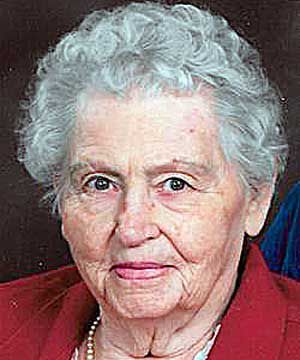
+ Erma Suhr + Funeral

Suhr

NELIGH — Services for Erma Suhr, 93, of Elgin will be at 1 p.m. Monday at Grace Lutheran Church in Neligh. The Rev. David Kuhfal will officiate with burial in Oakdale Cemetery in Oakdale.

Visitation will be 5-7 p.m. Sunday at Brockhaus-Harlan Funeral Home in Tilden.

She died Monday, March 20, 2017, at Community Pride Care Center in Battle Creek.

Memorials may be directed to The Arthritis Foundation for Research.

1923-2017

Erma Gail Suhr, daughter of Roy and Mary Elizabeth Ofe, was born April 22, 1923.

She was united in marriage to Alfred Suhr on Sept. 1, 1941. They were blessed with three children, Elvon, Elvena Gail and Jennell.

Erma was a member of Grace Lutheran Church in Neligh. She loved her family, grandchildren and quilting.

Erma is survived by her children, Elvon (Vicky) Suhr of Norfolk, Elvena Gail (Gary) Weger of Round Rock, Texas, and Jennell Suhr of Elgin; grandchildren Greg Suhr of O’Neill, Brent (Sue) Beech of Billerica, Mass., Julie (Mark) Smith of Neligh and Monica Zylstra of Solana Beach, Calif.; her great-grandchildren, Preston Smith and Spencer Smith of Neligh, Keith (Shelby) Catt of Lincoln, and Cassandra Borgmeier of Norfolk; her great-great-granddaughter, Kennedy Catt of Lincoln; her sister, Betty (Donald) Mahannah of O’Neill; her sister-in-law, Shirley Ofe of Oakdale; and numerous nieces and nephews.

She was preceded in death by her parents, Roy and Mary Elizabeth Ofe; her spouse, Alfred Suhr; her sisters, Esther Strahm, Viola Williams and Hazel Obermire; her brother, Donald Ofe; and 11 brothers-in-law and sisters-in-law.
Thursday, March 23, 2017

Baptism - Ryland Meis


Heavenly angels rejoice with us as Christ pours out His gracious water of Baptism upon Ryland, daughter of Kelsey Dreger and Nick Meis.  Sponsors are Travis and Kayla Coover, and witnesses are Nathan and Heather Struewe.  May God in His good grace keep her in the true faith by His Holy Word.